 Translate
Insights & Analysis
Lubricant, Base Oil & Formulation Insights
Meecarigno Insights provides practical technical knowledge on lubricants, base oils, PAGs, additives, formulation, applications and emerging industry developments.
We don't pretend to know everything, we investigate real-world formulation and lubrication challenges, explain the chemistry behind them, and turn technical information into practical guidance for formulators, engineers, buyers and technical teams.

The Fluids Powering the EV Revolution
PAGs are becoming an increasingly important part of the fluid technology supporting electric mobility.
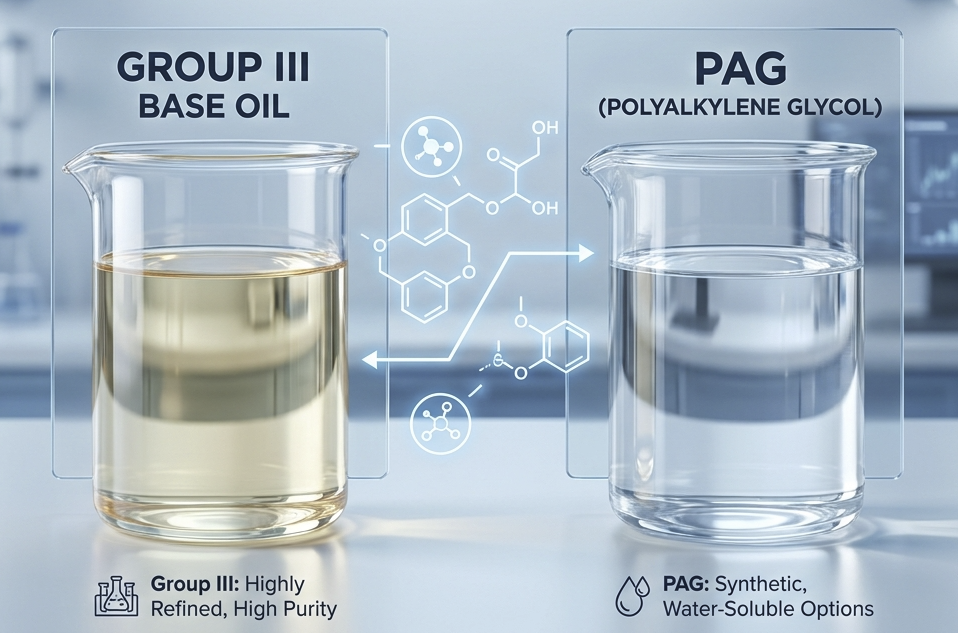
GROUP III vs PAG
Who Wants to Tell Finance?

The Base Oil Supply Crisis Nobody Is Talking About
Why Group III base oil supply is tightening and why PAG may be part of the answer.
Regulatory Intelligence
Regulatory Development
Keeping you informed about regulatory developments that may affect chemicals, formulations, raw materials and industrial applications in the UK and EU.
ECHA committees back EU-wide PFAS restriction; final SEAC opinion due end of 2026
ECHA's scientific committees have backed the proposed EU-wide restriction of around 10,000 PFAS. RAC adopted its final opinion in March 2026 and SEAC's final opinion is expected by the end of 2026, after which the European Commission decides on the restriction, with targeted derogations and transition periods.
UK REACH transitional registration deadlines extended to 2029-2031 (SI 2026/849)
The REACH (Amendment) (No. 2) Regulations 2026 (SI 2026/849) extend the UK REACH transitional registration deadlines to 27 October 2029, 2030 and 2031, banded by hazard and tonnage. The first tranche of dossiers was due 27 October 2026.
Disclaimer
Regulatory information on this website is provided for general information and awareness purposes only. It is based on information available from identified regulatory sources and does not constitute legal, regulatory or compliance advice. Businesses should review the applicable legislation, official regulatory information and their own circumstances before making compliance decisions.
Case Studies
Real-World Applications
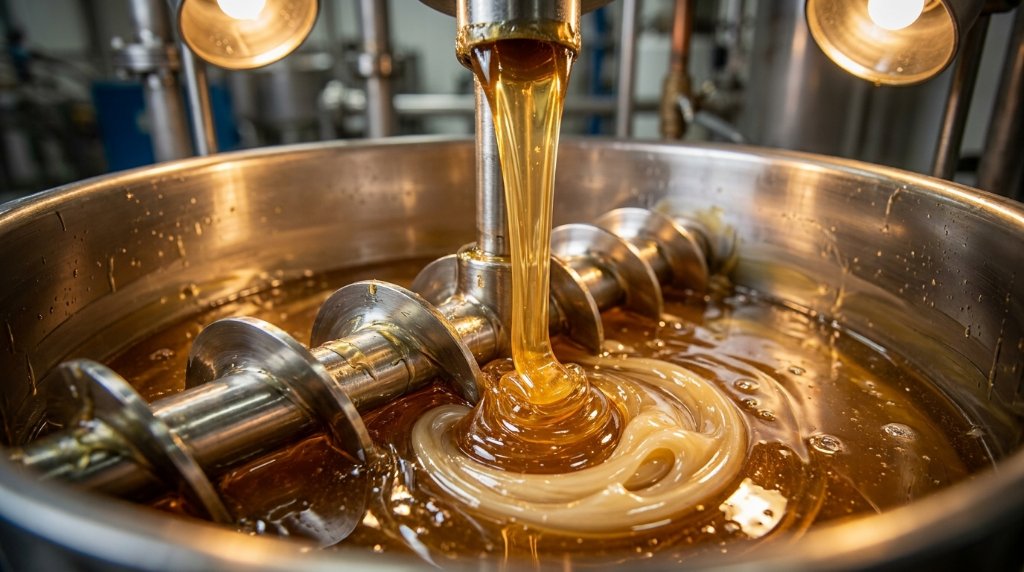
A Grease Manufacturer and the Base Oil Volatility
When a single base oil source becomes unreliable, grease manufacturers face decisions that are better made in calmer times than during a crisis.

A Compressor Operator and the Energy Efficiency Question
When energy costs rise, the lubricant itself is often one of the cheaper line items in the budget — but it can have an outsized effect on efficiency.
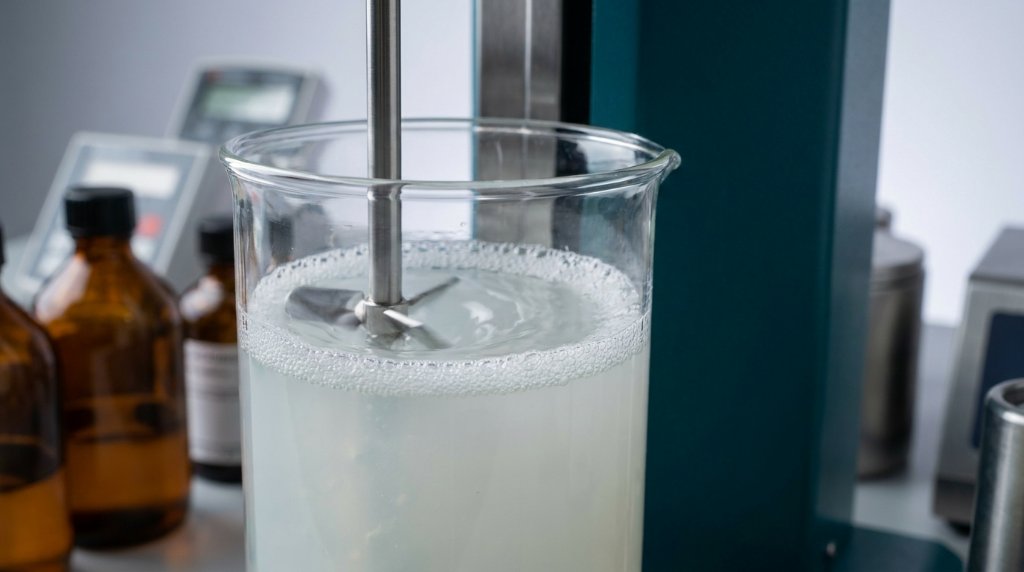
A Metalworking Fluid Formulator and the Foam Control Challenge
Foam problems in production-scale coolant systems are often a systems issue — water quality, agitation, additive interaction — rather than a single-cause fault.
Interactive
Chemistry Term Explorer
Search, filter, and discover key lubricant and tribology terms. Each term links to a relevant tool, article, or course.
Term of the Week
Viscosity Index (VI)
A dimensionless number that quantifies how much a lubricant's viscosity changes with temperature. A higher VI means the oil maintains a more stable viscosity across temperature swings.
Try our Viscosity CalculatorViscosity Index (VI)
A dimensionless number that quantifies how much a lubricant's viscosity changes with temperature. A higher VI means the oil maintains a more stable viscosity across temperature swings.
Try our Viscosity CalculatorKinematic Viscosity
A fluid's resistance to flow under gravity, measured in centistokes (cSt). It is the most common viscosity unit used in lubricant specifications and is measured at 40°C and 100°C.
Try our Viscosity CalculatorISO VG (Viscosity Grade)
The International Organization for Standardization's system for classifying industrial lubricant viscosity. An ISO VG 46 oil has a mid-point kinematic viscosity of 46 cSt at 40°C, within a ±10% tolerance.
Browse PAG GradesPolyalkylene Glycol (PAG)
A synthetic Group V base oil produced by polymerising alkylene oxides. PAGs offer high viscosity index, excellent thermal stability, and low friction, making them ideal for compressors, gears, and metalworking.
Read the PAG Technical GuideElastohydrodynamic Lubrication (EHL)
A lubrication regime that occurs in highly loaded rolling contacts (e.g. gears, bearings) where the lubricant film is thin and pressure is high enough to momentarily solidify the fluid.
Explore Bearing DN CalculatorPour Point
The lowest temperature at which a lubricant will still flow. PAG base oils typically have pour points of -30°C to -55°C, far lower than mineral oils, making them ideal for cold environments.
View Pour Point GuideFlash Point
The lowest temperature at which a lubricant generates enough vapour to briefly ignite when exposed to a flame. PAGs typically flash above 220°C, offering excellent fire safety margins.
View Flash Point TableOxidation Stability
A lubricant's resistance to chemical degradation by oxygen. Antioxidants are added to PAG base oils to extend service life by scavenging free radicals before they trigger chain oxidation.
Explore Antioxidant GuideSaybolt Universal Seconds (SUS)
A legacy viscosity unit measuring the time in seconds for 60 ml of fluid to flow through a calibrated tube. Convert to centistokes using ASTM D2161 or our Unit Converter.
Use Unit ConverterNLGI Consistency Number
A scale from 000 (semi-fluid) to 6 (solid block) that classifies grease stiffness. NLGI 2 is the most common multipurpose grade, with a texture similar to peanut butter.
View NLGI TableWater Solubility
Whether a PAG base oil dissolves in water. Water-soluble PAGs are used in metalworking and fire-resistant fluids; water-insoluble PAGs are preferred for gearboxes and compressors where water must be shed.
Check PAG CompatibilityThermal Conductivity
A fluid's ability to transfer heat. PAG base oils have superior thermal conductivity compared to mineral oils, making them ideal for EV drive units and high-temperature industrial applications.
Calculate Carbon SavingsBiodegradability
The extent to which a lubricant breaks down naturally in the environment. Certain water-soluble PAGs are classified as Environmentally Acceptable Lubricants (EALs) and biodegrade rapidly.
Calculate Carbon FootprintFriction Modifier
An additive that reduces the coefficient of friction between sliding surfaces. PAG base oils have naturally low friction coefficients, reducing the need for additional friction modifier additives.
Explore TCO CalculatorCarbon Footprint
The total greenhouse gas emissions caused directly and indirectly by a lubricant over its lifecycle. Switching to PAG can reduce carbon footprint through energy savings and extended drain intervals.
Calculate Carbon FootprintTotal Cost of Ownership (TCO)
The complete cost of a lubricant over its service life, including purchase price, energy consumption, maintenance, downtime, and disposal. PAGs often have lower TCO despite higher upfront cost.
Calculate TCO